Archive for the ‘General’ Category

Une pêche blanche au doré qui fait rêver!

Tuesday, January 12th, 2010

Martin[1]

Je me souviens des premières fois où j’ai eu la chance de voir à l’œuvre Al Lindner ou Bob Izumi ou encore Reno Viola bien installé devant la télévision le samedi matin. Étant tout jeune, ces expériences en pyjamas ont éveillé en moi une passion pour la pêche qui maintenant, ne fait qu’augmenter en ampleur à chaque année. The In-Fisherman (Al et Ron Lindner) en particulier était pour moi LA référence en matière d’information pour la pêche plus sérieuse. Leur approche systémique m’a permise d’augmenter considérablement mon taux de réussite ainsi que de capturer de plus gros spécimens avec une certaine régularité. D’après-moi, In-Fisherman qui est maintenant devenu « Lindner’s Angling Edge » en ondes sur WFN est nettement supérieur à la vaste majorité de programmes de pêche qui se contentent souvent d’une présentation très superficielle ou de la promotion de produits et de pourvoiries. On peut le comprendre. Après tout, « money is the name of the game », et ce dans toutes les facettes de la société d’aujourd’hui.

Permettez-moi de vous conter l’histoire d’un samedi matin bien ordinaire en tout début de la saison blanche. Il pleut et la glace du lac Saint-François ne m’inspire pas confiance donc je décide de m’installer devant la télé avec mon café pour savourer une émission de pêche ou deux. Malheureusement je constate rapidement que de nos jours les émissions de pêche sont plutôt des annonces publicitaires d’une demi-heure où l’on aperçoit des pêcheurs capturer poisson après poisson, sans trop d’explication et parfois avec de la musique qui ne fait qu’aliéner le téléspectateur de l’expérience vécue par les pêcheurs. C’est à ce moment que je me souviens d’un site dont parlait Jean Chartrand sur CKAC sur lequel je trouverais une vidéo de pêche sur glace au doré avec Luc Couture sur le lac Saint-Pierre. Je me suis dit, pourquoi ne pas aller regarder ça. Je me suis dirigé vers l’ordinateur et disons que je n’ai pas mis beaucoup de temps à être absolument estomaqué par la qualité exceptionnelle de cette vidéo. On parle ici de pêche blanche au doré «world-class ». Vous pouvez trouver ce bijou monté par Daniel Leclair et Jean-Guy Côté au www.peche-en-ligne.net

Luc_Daniel[1]

Je n’ai jamais eu la chance de pêcher au Lac St-Pierre mais croyez-moi j’ai l’intention de rectifier cette situation. J’imagine que ce plan d’eau ressemble quelque peu au Lac Saint-François malgré le fait que ce dernier ne soit pas aussi large et qu’il est un peu plus profond en moyenne que le lac Saint-Pierre. Toutefois, les deux plans d’eau étant tous deux des élargissements peu-profonds du Fleuve Saint-Laurent où le débit d’eau est contrôlé par des barrages hydro électriques, il y a certainement quelques parallèles à faire. Par exemple, le courant du fleuve doit y jouer un rôle primordial en créant une relation intime entre le courant du fleuve et les habitudes alimentaires du doré jaune. Les dorés du lac Saint-Pierre doivent eux aussi être paresseux, se contentant d’attendre la nourriture apportée par le courant dans des garde-mangers. D’ailleurs la description de la batture sur laquelle pêchaient Luc Couture, Daniel Leclair et Jean-Guy Côté me faisait beaucoup penser au type de batture que l’on retrouve à plusieurs endroits sur le lac Saint-François. Il s’agit d’une longue structure assez uniforme qui n’a pas de pointe à cibler comme tel, ni d’endroit qui attire le poisson en particulier comme un amas de roches par exemple. Une autre similitude entre les deux plans d’eaux est l’effet stimulant des navires qui passent régulièrement dans la voie maritime du Saint-Laurent sur les habitudes alimentaires des poissons prédateurs. Je n’y avais jamais pensé, mais avec l’absence de vagues pendant la saison hivernale cet effet pourrait être encore plus important. J’imagine que l’expérience des trois pêcheurs dans la vidéo était en fin de saison puisque la glace était très épaisse et que les navires commençaient à peine à passer. Un petit secret gardé bien gardé du lac Saint-François suggère que les dorés soient plus actifs suite au passage d’un navire dans la voie maritime. Je peux vous témoigner personnellement que certaines de mes plus belles prises sont survenues à de tels moments. En particulier très tard en soirée.

lac saint pierre

Pour revenir à la vidéo, au lieu de voir un gars prendre un poisson et de le remettre à l’eau pendant qu’un narrateur nous endort en perfectionnant sa prose, j’ai eu la très plaisante surprise d’être sujet à de maintes explications très claires des techniques utilisées, aux outils utilisés et surtout, à des résultats absolument époustouflants. On parle de dorés dont la taille moyenne se situe autour de 3-5lbs avec quelques monstres autour des 10lbs ainsi que d’un masquinongé et d’un esturgeon très respectables. Tout ceci fut jumelé à une forme de vidéographie que je nommerais «intégrale», ou, si vous le préférez «raw». On retrouve d’ailleurs sur le site un avertissement très clair qui indique qu’on ne fait pas affaire avec des experts de l’audio-vidéo. Je ne sais pas si l’intention en fut ainsi mais ce trait même donne au tout un cachet vraiment spécial. On relai l’expérience véritable de la journée aux auditeurs sans poupons et sans musique et narration distrayantes. C’est un véritable coup de vent rafraichissant. Bref, c’est du vrai, c’est pour les mordus, et je vous invite fortement à leur rendre visite.

Alors pour ceux et celles qui ne retrouvent plus la substance qu’ils recherchent dans les émissions de pêche et qui cherchent à en savoir plus long sur les endroits à privilégier autour des centres urbains, tout en apprenant les techniques à utiliser, la présentation de leurre, les habitudes saisonnières des poissons, je vous conseil de jeter un coup d’œil sur le site de Daniel Leclair et Jean-Guy Côté www.peche-en-ligne.net et à leur vidéos. Leur approche me rappelle celles des frères Lindners. Ils ont de la difficulté à cacher leur amour et passion pour le sport tout en nous fournissant de l’information utile et efficace. Car même si la pêche dans nos endroits peuplés est excellente, il est aussi très facile de rentrer bredouille sur ces imposants plans d’eau. Rien de mieux que des conseils d’experts pour se bâtir un peu de confiance!

On se voit sur l’eau, Jigger.

Bay of Quinte lives up to it’s reputation

Thursday, December 3rd, 2009

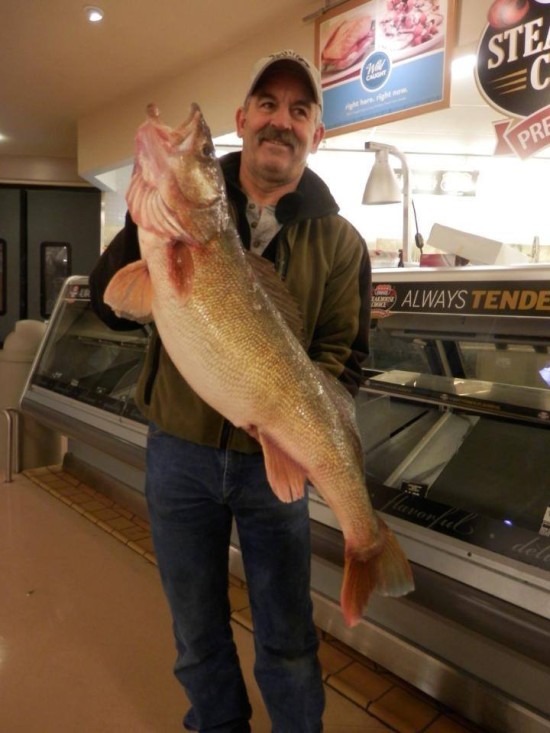
Merci à Alexandre Piette de m’avoir fait parvenir ce monstre de 12 livres de la fameuse Bay of Quinte. Je dois admettre que je suis un peu jaloux!

doré de Alex

A Trip’s Tale: Lake Nipissing and the French River

Wednesday, July 15th, 2009

N.B – There is now a link to the Fan Photos page on the right hand side of this blog under “links”. Check it out I’ll keep it updated as you send me pics. Dominic, the email address you left when leaving comments did not seem to work. I tried to PM you my email address but could not get through.

overlooking-nipissin

Ever since I’ve been a young child I knew there was something about lakes and rivers that fascinated me. To this day, I feel a spiritual connection to lakes. They are historic natural monuments of lore and legend that come in all shapes and sizes and gateways to the early explorers. They hide countless stories of exploration, survival and human endeavor, some known, others shrouded in mystery and others still untold. They can be dead calm one day and able to unleash a fury capable of capsizing the largest of vessel the next. Whether I am imagining myself paddling the waters of the St-Lawrence for the first time or what Lake Nipissing would have looked like 300 years ago, I seem to be magnetically attracted to these bodies of water. Campfire stories of giant muskies, huge sturgeon, trophy walleye and bass only further stimulate my imagination and attract me to the water. Fishing Lake Nipissing has been a dream of mine ever since I first saw the lake 6 years ago while driving to Winnipeg. Seeing as I have a new boat this summer I decided to take a trip up there to make my dream a reality.

Lake Nipissing, which means “Big Water” in Algonquin language, is truly impressive. It is the 5th largest lake in the province of Ontario with a surface area of over 873 square kilometers. Other than near the mouth of the French River the lake is surprisingly shallow with an average depth of only 15 feet or so*. The French River, separated in “upper” and “lower” sections by the Chaudière dam in Dokis drains the waters of Nipissing into Georgian Bay, a journey of 110kms. The entire upper portion of the French is a Provincial Park, meaning that the area has maintained its natural beauty. The river was designated a Canadian Heritage River in 1986*. Only a handful of small cottages can be found on the shores but for the most part it is left completely untouched. The Upper French River basin leading into Lake Nipissing is a breathtaking and absolutely spectacular array of mossy ice-carved Canadian Shield rock, countless islands, steep-walled gorges, rapids, areas of broad open water, large pine and birch trees and fish and wildlife. (*Source – Wikipedia)

mouth-of-french-river

The locals I spoke with all warned me about the lake’s fury and suggested I listen to weather reports before wandering out too far. When looking west towards the lake from North Bay one can easily see why the warnings were founded. Nipissing’s size is quite impressive and the shallow water creates larger and more irregular waves (according to locals). This is particularly true if you are in the East end of the lake during a strong Westerly wind. I would not want to get caught out there on a very windy day or during a strong thunderstorm. Lucky for my friend Andrew and me, Mother Nature provided us with two spectacular days just as our trip was set to come to an end. This summer seems set to break records for all-time low temperatures so we eagerly took full advantage of those two days.
My adventure started west of Algonquin Park in Huntsville, where my friend Andrew was spending time at his family cottage on Oxtongue lake. I spent a night there and fished that lake a little but the lake trout there are hard to catch at best and there are no walleye in that particular lake. We did catch a few bass but for the most part we spent time relaxing and enjoying the scenery. From there we made our way up to North-Bay on a cold and wet morning where we were graciously offered a meal and a place to spend a night by Marcel, an old friend of Andrew’s. I was worried about my Optimax because I was running at 6000 RPM at 25mph and I usually always keep the RMP at about 5600 at 35-40mph. Something must have been thrown off during the 6hr trip up through Algonquin Park because my fuel gauge also stopped working. The engine didn’t sound like it was over revving but I figured it was in my best interest to have it looked at. We tried a place in Huntsville that dealt with Mercs but unfortunately they weren’t very interested in helping us out there. Fortunately someone at a coffee shop in North-Bay directed us to Power Sports & Marine located on Main Street. The guys there immediately ran a diagnosis on the engine (I.E plugged it into a computer) thankfully revealing nothing was wrong with the motor itself and that the tachometer and fuel gauge were broken. I also decided to install a transom saver while I was there as the motor bounced around quite a bit on the highway without it. The positive diagnosis was obviously a relief and the fuel gauge was fixed. I can’t thank Maurice and the rest of the crew over there enough for stopping what they were doing and taking me in without notice like that. If you’re ever in the area and need service look them up they are great.

island-on-nipissing

Back to the trip. We didn’t wet the boat in North-Bay seeing as the wind was pretty nasty and the weather wasn’t exactly warm or particularly dry. We decided to spend the evening indoors at Marcel’s sipping scotch and relaxing instead. The next morning we headed north to Sturgeon Falls and eventually made our way to the Cache Bay area. I didn’t like the looks of the bay on the chart plotter as it is littered with very shallow rocky shoals and there are no deep water spots whatsoever that I could find nearby. I’m a strong believer in the fact that deep water is a good starting point to find fish holding structure when the water reaches 70F so this area had me at a loss. Couple that with the fact that the entire west arm seemed to be filled with cabbage weed patches and you end up with a difficult situation to find fish in. I didn’t really know where to start in what seemed to be a vast and featureless bay of water 12 feet deep or shallower. I knew this wasn’t where the majority of the lake’s fish were holding immediately. Despite this set-back we tried to cast for pike, tried jigs, pull spinners and live bait over weed patches, some topwater baits for bass and nothing. A storm eventually moved in and we headed back in empty-handed, stopping in at a local tavern for a pint hoping to meet some local fishermen. We met up with a gentleman there who fished the lake for the last 40 years. He seemed discouraged about the lack of fish in the western area of the lake but suggested we try the French River. I had already marked a few spots near the mouth of the French on the chart plotter earlier and his suggestion only drove home the point that I wanted to get there. We could have made the boat ride over that day but with thunderstorms lurking in the area it was best to leave first thing in the morning and to get there by road. As soon as first light broke, we were off to the Ojibwa community of Dokis First Nations.

Once in Dokis we found a place to buy camping permits for the French River Provincial Park and a small marina which became home base. The camping fee is 9.50$ per person, per night and you need to camp in a designated campsite. We loaded the boat with tents, sleeping bags, food and everything else needed to set up camp and followed the map about 15 miles upstream until we found a small isolated bay with designated camp sites. This spot was spectacular. It was also one of the few places that allowed me to park the boat against the shore as most other sites were rocky and did not allow for me to dock the Lund. The boat ride to camp was a scenic, windy adventure through a maze of rocky islands. The neat thing about it was the sense of total isolation the bay provided. We were absolutely alone out there other than a few people staying in a cottage about a mile away. The place is a maze of islands and waterways. Be careful though, there are many sunken islands, shoals and rock piles hidden in the tea-coloured waters that could ruin your trip in a hurry. The chart plotter was vital in allowing us to quickly find safe paths through this very uneven and unpredictable terrain.

The fishing here was excellent. Walleyes were found on every piece of structure I had marked the night before on the chart plotter and we also found fish in other places such as saddle areas between islands and long rocky points with access to deep water. The largest fish came out of the main river channel on rock piles. The magic depth seemed to be about 20 feet and the best spots had very deep water nearby and came up as shallow as 3-4 feet on top but did not break surface. For some reason these particular rock piles held more and larger fish. The best fish of the trip was caught on one of these rock piles on the edge facing upstream just before a huge drop-off into water that reached almost 100 feet deep. The fish was right on the edge, on a small rocky flat just waiting for something to eat to come close enough. It weighed in at 8.2lbs on the digital Rapala scale and provided Andrew with the thrill of a lifetime. I couldn’t ask for a better birthday present than to put a good friend on his personal largest fish. It was definitely a special moment for both of us.

andrews-monster2

Walleyes readily ate jigs tipped with minnows (the go-to bait of the North Country), crawlers on spinners and crankbaits. Most of our fish were caught on spinners for the simple fact that I wanted to cover as much water as possible. After catching 2 or 3 fish on one rock pile the bite died down and a move to another spot was necessary. I think fish in the St-Lawrence are less susceptible to being spooked easily by a boat. Out here the fish see and hear far fewer boats overhead and I think we were spooking them after catching a few fish. They were also tight on specific spots on the structure rather than spread out over it so it was necessary to keep moving and find new spots as the bite died after 2-3-4 fish. Once we left a piece of structure we would come back to it after about an hour and once again it was productive. Fish were fairly easy to locate for the most part.

andrew-slot-fish

After an afternoon of walleye fishing and exploration we decided to head into camp for a shore lunch. I have always wanted to experience a true shore lunch and made sure to pack the tools for the job. I had a cast iron pan, tongs, an oven mitt, utensils, napkins, butter, onions and potatoes, lemon, paper plates and now, walleye and a jumbo perch. I kept things simple, cooking chopped potatoes with onions in butter first and then fish dipped in a flower and pepper mix second. Beat that Daryl Cronzy.


shore-lunch-is-ready

A little later we cleaned our campsite and cooking tools thoroughly to avoid bear visits, had a quick swim, grabbed a couple of jigging rods, tied on a 3/4oz jighead tipped with a minnow on fluorocarbon leaders and threw casts towards a small rock pile at the mouth of the bay. We had a beautiful warm, clear evening to enjoy and things started off on the right foot. I hooked a decent walleye on my very first cast and lost him at the boat. My third cast put another fish in the boat and so the story went until dark. What a memorable evening of fishing. It felt like bass fishing for walleyes. They would grab the jig and swim with it moving your line across the water. I’ve never experienced that with walleyes. Usually they spit out jigs as fast as you can say fish on. I cast my jig on top of the rock pile and lifted it up about 3-4 feet and let it sit, repeating until the jig was right below the boat. Most the time however, the jig didn’t have a chance to make it back to the boat. Again, most of the fish hit it about 20 feet of water, just beside a weed line. We had already eaten and didn’t want to keep fish near our campsite to avoid attracting bears so all the fish were released that night, including this nice one which was a slot fish anyway.

jign-minnow-shot

andrew-jigging-dusk

Despite having only had two days of nice weather my trip to Lake Nipissing was a complete success. I absolutely fell in love with the area and truly enjoyed the experience of camping and fishing in such a remote and pristine place. I wish I had a month to spend there to explore. The area is huge, full of fish and it would take a lifetime to discover it all. I already want to return there as soon as I can to unravel more of the lake’s mysteries.

Until next time, stay outside! Jigger.

tent-camp

boat-camp

boat-camp-fireplace

campfire

dusk-twilight-bay

June Rockpile Eyes

Monday, July 13th, 2009

Ok so the fans didn’t appreciate my birdbrain story. I’ll admit it was quite different. But hey, it’s my blog and I felt like trying something new. :) Now let’s get back to fishing.

It’s been a strangely cold June and early July so far as most of you are aware, but the fishing has been decent. I had to chance to fish with my old friend Donald twice in June and luckily the fish were cooperative. I was able to put Donald onto his personal best walleye and we did quite well numbers-wise also. We caught most of our fish on channel rockpiles but this larger one lingered in shallow spawning waters. I have caught larger fish returning from their spawning run a few times quite late in the season  when most anglers have moved over to the deeper summer structure.  When the fishing slows on the big lake in late June sometimes it really pays to take a look to the shallows to see if you can find a lingering fish; particularly late in the day. I assume these are female fish who took a longer time to recuperate after spawning, hence them usually being at or better than the 5lbs mark. They stay in shallow water longer than most people, myself included think. Either that or they migrate in and out of there. I know walleyes move a lot and this is also possible. Point is, don’t give up on the shallows two weeks into the season. Fish will stay there into water temps nearing 70.

donald-walleye


I really enjoy finding new spots and having a chartplotter immediately made me a better angler. It allows you to pinpoint your boat location on structure instead of relying on maps and visual reference points like islands for example. It’s a tremendous advantage because you can fish new areas without the need to explore them first. You can understand the piece of structure you are fishing without seeing it and you can be absolutely sure you are in the right spot. Walleyes really like rock. That’s no secret. Thing is, finding rocks in deep water on lake St-Francis can be a real challenge. There are cues on the surface that you can use if you don’t have a chartplotter. You’ll notice rock piles create a distinct effect on the surface in current. As the current hits a rock pile the water gets rushed to the surface and creates a small noticeable backwash on the surface. The presence of these on the water surface often indicate that something is going on on the bottom and they usually mean that  you are on good walleye holding structure.

andre-walleye

Once you have found these pieces of structure it’s a matter of presentation. This can get tricky on lake St-Francis for two reasons. First you have the water clarity problem. It’s no secret that the zebra mussel invasion has greatly cleared up the waters of the Great Lakes and St-Lawence. I remember as a kid that the water was always slightly coloured and now we see bottom in 20 feet of water or more in certain cases. The solution to this problem for me has been the use of fluorocarbon leaders on all my applications. Learn to tie a uni to uni knot and you’re all set. I’ve never had a uni to uni knot slip on me and I use it with Fireline and other super braids. Fluorocarbon is tougher than mono, more abbrasion resistant which is a huge plus when fishing rocks, and it is virtually invisible under water. This allows me to use a heavier pound test leader than I would using mono. Second you have the current. Some guys are really good at presenting jigs in current on top of structure. It’s not one of my fortes so I usually prefer to troll although you will catch lots of fish on jigs.  I was fishing a spot with two other boats and had a little chat with a guy who was jigging so violently it looked like he was trying to chop wood or something. I caught 3 walleyes for his 8 that night. “They like it North South” he said to me. Regardless of the way you choose to target the fish you need to be on (or near) bottom so prepare to use heavy sinkers and you can expect your wrist to feel like it’s going to fall off at the end of the day. However the reward is definitely worth the pain, as my mother will confirm.  This very nice fish, her personal best, was patroling a rock pile and didn’t hesitate to eat. When the fish are on top of the rock pile as opposed to the edges of them you can assume they are there to eat. They hover over the rocks in search of forage. If you spot arches on your sonar over deep rock piles indicating that the fish are about 2 feet off bottom it’s a safe bet they are on the feed and you can catch them. If the fish are hugging bottom on the sides or behind rock piles they may be tougher to coax into biting.

mom-walleye1

As always the fishing slows after about 1 or 2pm until the sun lowers after dinner. It pays off to try your luck at dusk if you’ve had a tough day. The fish definitely become more aggressive as light dims even into complete darkness. Fishing late in the day can also allow you to witness spectacular sunsets and there is a good chance you’ll be the only one on the water. Well, other than me that is.


value=”http://www.youtube.com/v/bHKNYrnrf7M&hl=en&fs=1″>andre-night-walleye

Stay Outside! Jigger.

june-sunset

My Tern

Tuesday, June 9th, 2009


Sometimes I long to be a tern. Sure, I’d have to eat raw fish, but that would be a small price to pay considering I’d have the manoeuvrability of an F-16 and the life-long free spirit of a teenager. Besides, if you know me, you know how I feel about sushi.

A person’s intention when calling someone a bird-brain isn’t usually to compliment them on their intellectual ability, or their particularly quick thinking. I suppose the insult is founded on the simple observation that birds happen to have very small brains, and therefore must not be endowed with a high IQ. In fact, if your little sister or brother knew about a bird’s ability to recognize, decipher and communicate, they just might say: “thanks”, when you call them a bird-brain.

I always thought of birds as somewhat strange. They certainly are masters of attracting attention. Whether it is a swallow’s fly-by inches from an unsuspecting wanderer who found himself too close to a nest or the proud strut of a wild-turkey gobbler, bird behaviour seems to draw plenty of attention and curiosity. There are plenty of people who spend great amounts of time and money observing birds, and now, I think I’m beginning to understand that it isn’t only because of their beautiful plumage. 

When I was in University, I had the pleasure of taking a class with a certain Dr. David Bird, of McGill. He is foremost a great guy, a passionate nature lover and, believe it or not, an ornithologist (look it up if you don’t believe me). His passion for the subject changed my perception of birds. He allowed me to realize that bird behaviour differs from that of a lot of other familia of animals. For example, he tought me that birds of prey, falcons specifically, are specially trained to seek and kill any smaller birds on airport runways. I had no idea the ancient art of falconery had this modern application. He also told us countless stories of banded birds returning to the exact location where they lay their nests year after year.  Indeed, birds are worth a second look.

Apparently, a bird and his keeper can develop a relationship comparable to that of a horse and his master. Dr Bird invited one of his friends who raises falcons (incidentally falconry is legal in every province with the exception of Quebec) into our classroom for an advanced version of show-and-tell, if you will. I was amazed and quite taken aback by the grace and poise of this animal. It commanded immediate respect. However, what I retained long after this presentation was the handler’s response to a fellow student’s question. She asked the man to describe his relationship with the animal; whether it was purely utilitarian or if emotions were involved. The handler then looked up outside the window for a brief second and said “think of it as a flying dog, who probably wishes you had wings so you too could be up there flying alongside him”. Now I wanted my own flying dog.

I put this little encounter with the falcon and his friend away in the memory bank and did what I do best; I went fishing. 

Solitude is something we as fishermen sometimes struggle with. It can be nice to be alone in the boat, with only thoughts to keep you entertained. Yet sometimes you feel the urge to share the countless events of a day’s fishing with another soul. During almost every fishing outing, something unusual happens; something that is out of the ordinary. It could be a sudden storm you had to hide from, the discovery of a new shoal or small island, engine problems, an amazing sunset, the big one that got away, dropping your new sunglasses in the water, or anything, really. Here is one of those moments.  

I was on a roll, the perch were hitting hard and the action was fast and furious. The bites came as soon as my sinker hit the bottom. The unlucky minnows that filled my bucket were quicly noticed by a playful tern. At first he circled overhead, scanning, debating and planning his attack. He wanted a minnow. After a few minutes, as he approached closer and closer he came down and snatched one of my minnows from the surface. The audacity and determination of this little vertebrate wowed me. Following his successful first attempt he repeatedly came flying down in a scooping motion not 3 feet away from me catching discarded minnows out of thin air. It was a uniquely intimate feeling to be hand feeding a tern. I turned my head to look at him but I couldn’t see anything, I could only hear his screeeee screeee screeees, as he got more and more excited at the thought of gulping another discarded minnow. It’s almost as though he actually knew how to stay out of sight but still get his minnows. I could turn my head to the right, up, left, and have a real tough time locating him. Then I would throw another minnow in the water and swoooosh!, down he came in a graceful demonstration of evolutionary aeronautic perfection. 

This little game went on for a while; sometimes he disappeared off to land for 10 minutes and returned now and then to see if I had more shiners for him. Eventually, as I built a little confidence in him, I was able to call him in close with a sound I can’t begin to describe in words. I could get him to circle and come in really close with a series of tsk, tks tsks.  He became more and more trusting as time went on, as long I rewarded him with minnow after minnow, of course. I had made a new friend. I’ve decided his name is Terny. 

The unique thing about Terny is that he only comes around when I’m not accompanied by someone in the boat. Anytime I’m perch fishing alone, he comes to visit at one point in the day. When he does come around, I ask him how the fishing is that day and he responds with another barrage of Screeee! Screeee! Screeeee!, which I’m starting to suspect means Give me minnows! Minnows! More!! I’m starting to really like this little bird.

The reward of this interaction, and I suspect the reason I’m writing this, is difficult to explain. The best way I can put it is that it feels like the discovery something extraordinary, that you want to share with everyone but cannot, because only you can see it. The experience provides me with something that I can’t objectify, quantify or measure. It brings me back to a time when everything had yet to be discovered ; a time when becoming a bird was as simple as closing my eyes and picturing the growing distance between myself and the earth below as I flapped my wings ; a time when there were no limits to imagination. In the moments when Terny comes by and we hang out, there is no death, no war, no disease. I can’t help but think that in his mind, there’s curiosity as well when he looks into my strange floating machine and that he too, for that moment feels an overwhelming sense of simple serenity. I bring him minnows, and he thanks me with a reminder of just how trivial and petty many of the things we so strongly hold onto really are. 

I really do long to be a tern, just for one day.

my-tern

Until next time, stay outside. Jigger